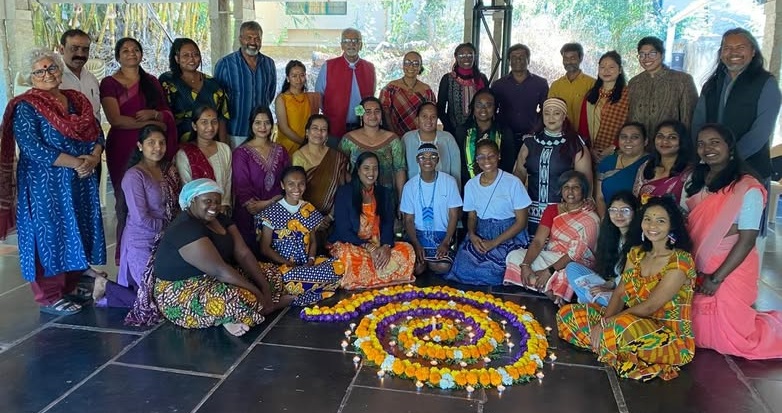
Visthar, in partnership with the Council for World Mission (CWM), hosted a residential
intensive titled Gender, Diversity, and Transformative Leadership (GDTL). This month-long
course was held from February 4th to 28th, 2026, at the Visthar campus in Bangalore. The
program convened a vibrant cohort of 20 leaders representing 14 countries across the
Caribbean, Africa, the Pacific, and South Asia.
Moving beyond “surface-level fixes,” the course aimed to dismantle deep-seated structures
of power and patriarchy. At the heart of this journey was a fundamental shift away from
traditional, gender-blind approaches toward an intentionally inclusive, gender-
transformative leadership model.
The program’s pedagogical foundation was deeply rooted in transformative learning.
Drawing inspiration from Paulo Freire and bell hooks, the curriculum treated education as
the “practice of freedom” rather than mere information sharing. This encouraged
participants to break internal boundaries and challenge what they believed to be possible.
This approach emphasised “conscientization” and the breakdown of classroom power
dynamics, fostering an environment where difficult, critical questions could rewrite the
script of entrenched conversations.
Intersectionality and “Power With”
The transition to gender-transformative leadership was facilitated through a “multifocal
lens” of intersectionality. Rather than seeing gender in isolation, participants analysed how
race, caste, class, disability, and age intersect to create unique experiences of both privilege
and oppression. This shift allowed participants to move away from top-down, authoritarian
concepts and practices of leadership. Instead, they embraced a philosophy of “power with”
rather than “power over”. As one participant reflected, transformative leadership is not
about having all the answers. It is about creating space where others speak, decide, and
shape outcomes—a necessary unlearning of the idea that leadership equals control.
Learning Through Experience
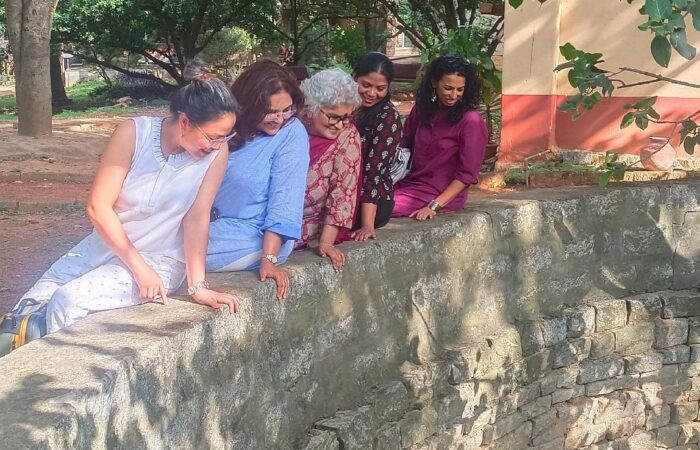
The methodology was intentionally diverse, utilising “living classrooms” such as creative
expression and theological re-imagination. It also included field immersions in Koppal and
Bandhavi, which demonstrated that “agency does not wait for permission”. This was
particularly evident in the resilience of adolescent girls in rural villages.
Inspired by this grassroots agency, participants developed concrete Action Plans. These plans
aim to implement inclusive liturgies and safe dialogue spaces in their home contexts,
challenging gender-biased religious and institutional perspectives and practices.
A participant shared in the final evaluation:
“I used to think leadership meant being strong, certain, and in control. But I have realised
that this can silence other voices. To become a transformative leader, I am learning to listen
more, ask questions, and create space for others to contribute. Now, I see leadership less as
‘I lead, you follow’ and more as ‘We learn, we build, we transform, together.’”
In her valedictory greetings, Course Director Mercy Kappen framed the conclusion of this
journey as an “act of transgression”—a movement against and beyond existing boundaries.
She challenged the graduates to return to their communities as “prophets of hope” and
“architects of the world that is coming,” carrying the breath of new possibilities into their